
Technical support for procurement, vendor coordination, QA/QC, equipment integration and project delivery for shipyards, boatbuilders and vessel owners.
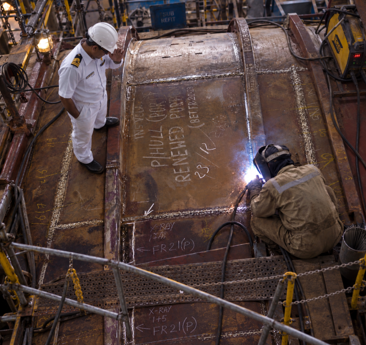
The technical problems on a build or a refit are usually solvable. What sinks the schedule is a specification vague enough that three vendors quote three different jobs, an inspection regime nobody has written down, a compliance matrix that is out of date, and a handover package assembled in a rush at the end from whatever anyone can find.
This service is the capacity to do that work properly when your own team is already committed. It suits shipyards under production pressure, owners running a build or a modernization without an in-house engineering department, and programs where an independent technical reviewer is needed alongside the delivery team.
It is engineer-led rather than administrator-led. A specification written by someone who understands the equipment and how it will be installed gets priced accurately. An inspection plan written by someone who has stood in a shipyard gets used.
Engagement is flexible by design. A single specification, a defined package across a production phase, or ongoing part-time capacity through a program. You add technical capability for as long as the work needs it and no longer.
Four areas spanning the delivery cycle — buying the right thing, proving it was built right, keeping the program visible, and closing it out so the vessel can be operated and maintained.
01
Buying equipment that fits the vessel and the budget
Specifications written tightly enough that vendors are quoting the same scope, with the interfaces, standards and acceptance criteria stated rather than assumed. On the return leg, technical evaluation of the bids that come back — including the ones that look cheapest because something has quietly been left out.
Evidence collected as the work happens
Inspection and test plans that set out who checks what, when, against which standard, and what evidence is retained. Alongside them, a compliance matrix tracing every requirement — regulatory, contractual and class — to the document or test that satisfies it, maintained through the build rather than reconstructed at the end.
Knowing where the program actually is
Schedules built around technical dependencies rather than optimism, with progress measured against defined completion criteria. Reporting written so an owner, a board or a customer can see status, risk and change without needing it translated by the person who produced it.
Making the vessel supportable after delivery
Failure modes, effects and criticality analysis to find the failures that actually matter, and to base maintenance and spares decisions on consequence rather than habit. At the end of a program, the handover package that lets the operator run and maintain the vessel — which is the part most often left until there is no time left for it.
05
BuiltForSea works with specialist technology partners for marine corrosion protection and anti-fouling systems. BuiltForSea provides vessel-specific engineering, integration, layout, inspection, technical coordination and lifecycle support in Canada as applicable to the project.
Sacrificial aluminium and zinc anodes
Impressed Current Cathodic Protection (ICCP)
Low-signature ICCP for naval applications through the technology partner
Active Shaft Grounding
System sizing and vessel-specific integration support
Anode and reference-electrode layout
Dielectric shield sizing / layout where applicable
Inspection, health checks, maintenance and replacement planning
06
BuiltForSea works with specialist technology partners for marine corrosion protection and anti-fouling systems. BuiltForSea provides vessel-specific engineering, integration, layout, inspection, technical coordination and lifecycle support in Canada as applicable to the project.
Marine Growth Prevention / anti-fouling systems
Sea-water intake protection
System integration and retrofit support
Inspection and lifecycle support
A P.Eng. naval architect who is also a PMP, with twenty years across shipbuilding, refit and program management. Both halves of this work in one person.
Someone who understands the equipment, the installation and the vessel it goes into — so the document survives contact with a vendor.
Add technical capability for a specification, a production phase or a program, and release it when the work is done.
Available as owner's engineer, reviewing a yard's submissions and progress on your behalf rather than defending them.
PMP-level planning, risk and change control applied to marine work, where the failure modes are well known and rarely technical.
Larger packages draw on an established overseas drafting and engineering team, with BuiltForSea remaining prime contractor and accountable for every deliverable.
Your templates, your document control, your procedures and your confidentiality requirements — not an imported process you then have to manage.
A specification that needs writing, a bid pack that needs reviewing, an inspection regime that does not exist yet, or a close-out nobody has time for. Describe the gap and the timeframe, and you will get a scope, a timeline and a price against it.
By the package wherever the work can be defined, because that puts the risk of an estimate on me rather than on you. Where the work is genuinely open-ended, such as ongoing support through a production phase, a day-rate arrangement with an agreed monthly ceiling works better. Both are agreed in writing before anything starts.
Yes, and it is one of the most useful ways to use this service. Reviewing submissions, verifying progress claims and assessing variations on the owner's behalf. I would not take that role and a role for the yard on the same project.
Yes. Producing documents in your formats, inside your document control and under your confidentiality requirements is part of the job. A supplier who imports their own system usually creates work rather than absorbing it.
The opposite. This service exists because good engineering teams get committed to the critical path and the supporting documentation slips. Bringing in capacity for the overflow keeps your engineers on the work only they can do.
Yes. Larger packages draw on an established overseas team of naval architects, structural, mechanical, piping and electrical engineers and drafters — For larger or multidisciplinary scopes, I can engage established engineering and drafting collaborators. Their role and responsibility will be identified to the client before work starts.. BuiltForSea remains prime contractor: I set the scope, review the output and remain responsible for what you receive.
Both. Specifications, reviews, matrices and reporting are done remotely. Inspections, witness points, vendor visits and close-out activity are attended in person and scoped separately.
Deciding where maintenance effort and spares money should go. It identifies which failures carry real operational or safety consequence, so a maintenance plan reflects criticality rather than tradition. It is most valuable before a maintenance regime is set, and when an operator is carrying spares for equipment that never fails while missing the ones that do.
Sometimes, and the first step is an honest assessment of where it actually stands rather than where the reporting says it does. If the recovery needs capability I cannot provide, I will tell you that at the assessment stage rather than after taking the work.
Address : Hamilton, Ontario, Canada
Email : info@builtforsea.com