
Getting a vessel through docking with a defensible scope, and back into service without surprises — Engineering support for vessel inspection, dry-docking, repair, refit and return to service for vessel owners, operators, shipyards and boatbuilders.
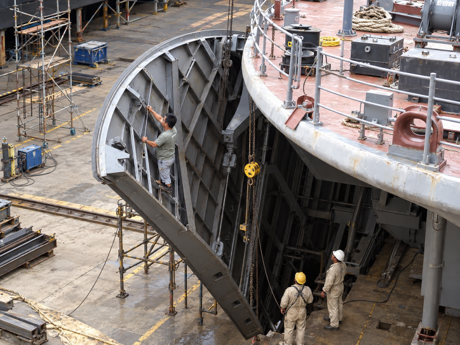
Almost every refit that runs over budget runs over for the same reason: the scope was never properly defined. Work is discovered once the vessel is on the blocks, priced under time pressure, and approved because the alternative is a vessel sitting idle in a dock that is costing money every day.
The way out of that is to know the condition of the hull and structure before the docking is booked, to write a detailed and well-defined work package, and to have someone technically competent verifying the repairs as they are done.
That is the work I do here. Inspections that produce evidence rather than impressions, defect evaluations that separate what must be fixed now from what can be monitored and Verification that completed work meets the agreed scope and specifications.
When I am engaged by a vessel owner, I can provide independent technical representation. When I am engaged by a shipyard or boatbuilder, I can support the yard team with engineering, inspection, repair assessment and documentation. I will not take conflicting roles on the same project.
Four areas that follow the shape of a docking: find out what is there, decide what it means, plan the work, then confirm it was done.
01
Establishing the actual condition of the vessel
Structured inspection of hull plating, framing, internals, tanks and voids, recorded so the findings can be compared against the last inspection and the next one. Thickness measurement where wastage is the question, close-up examination where corrosion, cracking or previous repairs are.
What it means, and whether the fix worked
A defect list is not a scope until someone has judged the significance of each item. I assess what affects structural strength or watertight integrity, what is cosmetic, and what can be safely monitored to the next docking — then verify completed repairs against the agreed specification.
A clearly defined scope that supports accurate pricing
The document that decides whether a docking runs to plan. Work written item by item with enough technical detail that competing yards are quoting the same job, plus the docking arrangements themselves — block plan, loading condition and access — settled before the vessel arrives rather than on the day.
Spending the maintenance budget where it returns most
Coating and renewal decisions made against measured condition and a planning horizon, not against whatever looks worst on the day. The aim is a maintenance plan across dockings that avoids paying twice — renewing steel that had years left, or recoating an area that will be cut out next time.
Twenty years of dry-docking, refit and asset-management programs, delivered by the person who will be standing in the dock with you.
I have no share in the repair contract. What I say needs doing is not influenced by who gets paid to do it.
Work defined in advance is priced competitively. Additional work identified during dry-docking is assessed and priced by the appropriate service provider.
A P.Eng. naval architect deciding what is structurally significant, so items are neither over-repaired nor quietly deferred past the point of safety.
Completed work checked against the specification before it is signed off and covered by paint.
PMP-level planning, reporting and change control applied to dockings and refits, which is usually where the money is lost.
Findings recorded so the next docking starts from evidence and trends rather than from a blank page.
Tell me the vessel, its service, when it is due out of the water, and what you already know about its condition. Early inspection and work-scope development can reduce uncertainty before the vessel enters dock and help manage growth work.

Address : Hamilton, Ontario, Canada
Email : info@builtforsea.com