Vessel maintenance is often viewed as a necessary operational expense. In reality, a well-planned maintenance strategy is one of the most effective ways to protect vessel availability, safety, asset value and long-term operating performance.
Waiting for equipment, structures or systems to fail can create unplanned downtime, emergency repair costs and difficult operational decisions. A proactive approach allows vessel owners and operators to identify issues earlier, plan interventions properly and reduce disruption to operations.
Why reactive maintenance can become expensive
Reactive repairs often happen when a problem has already affected vessel operations. A failed component may require urgent procurement, additional labour or an unscheduled repair period.
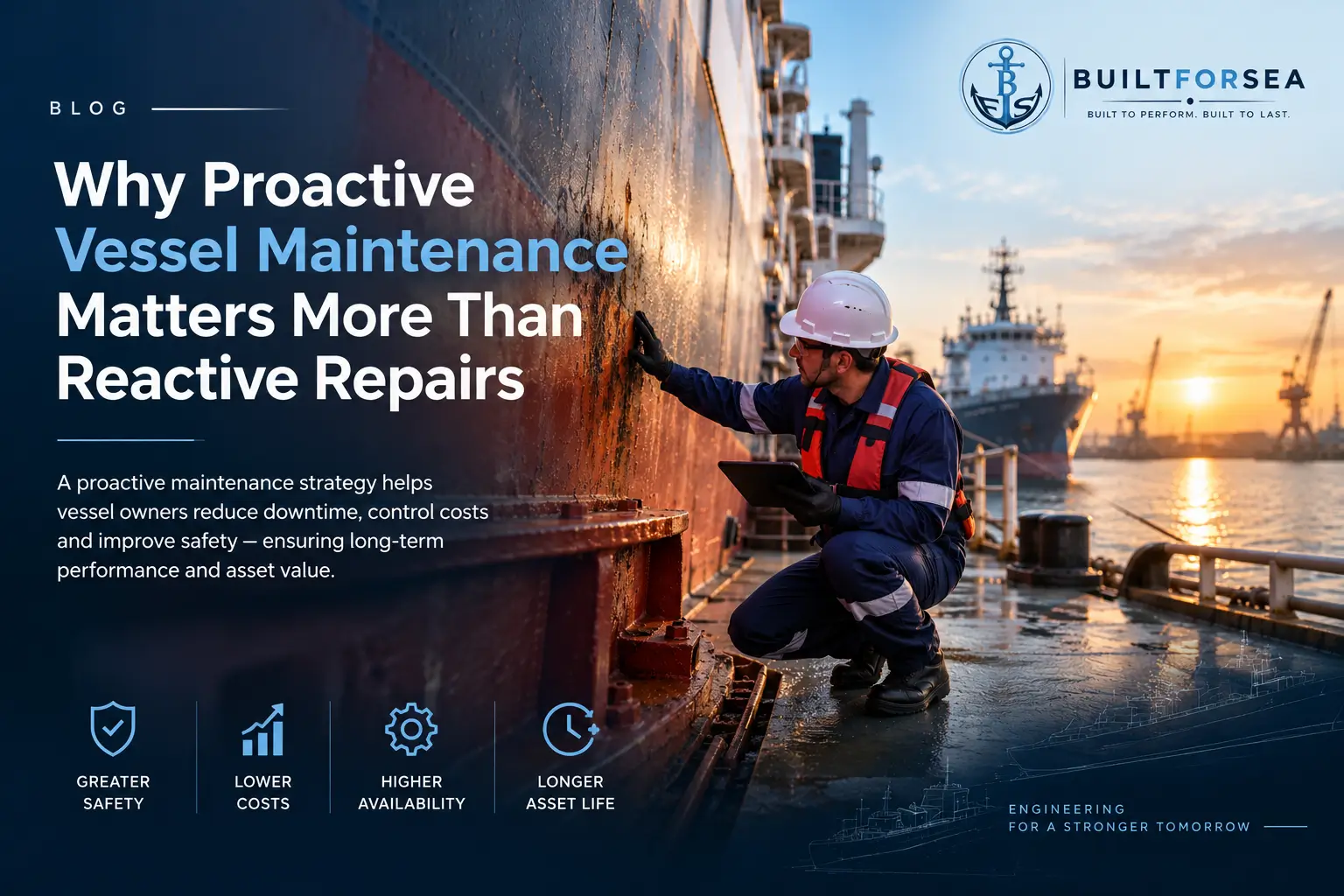
For structural issues, the consequences can be even greater. Corrosion, coating breakdown or local damage may remain manageable when identified early but become more extensive when left unaddressed.
Proactive maintenance changes this approach by identifying potential problems before they become operational failures.
What a proactive maintenance strategy includes
A practical maintenance program should consider more than scheduled servicing. It should bring together:
- Equipment condition
- Structural condition
- Inspection findings
- Maintenance history
- Operating environment
- Known defects
- Repair priorities
- Future docking requirements
This creates a clearer picture of the vessel’s actual condition and helps owners prioritize resources.
The role of inspections
Regular inspections provide valuable information for maintenance planning. Hull and structural inspections, compartment assessments, corrosion reviews and condition assessments can help identify emerging issues before they become major repair requirements.
Inspection findings should not exist in isolation. They should feed directly into maintenance and asset-management decisions.
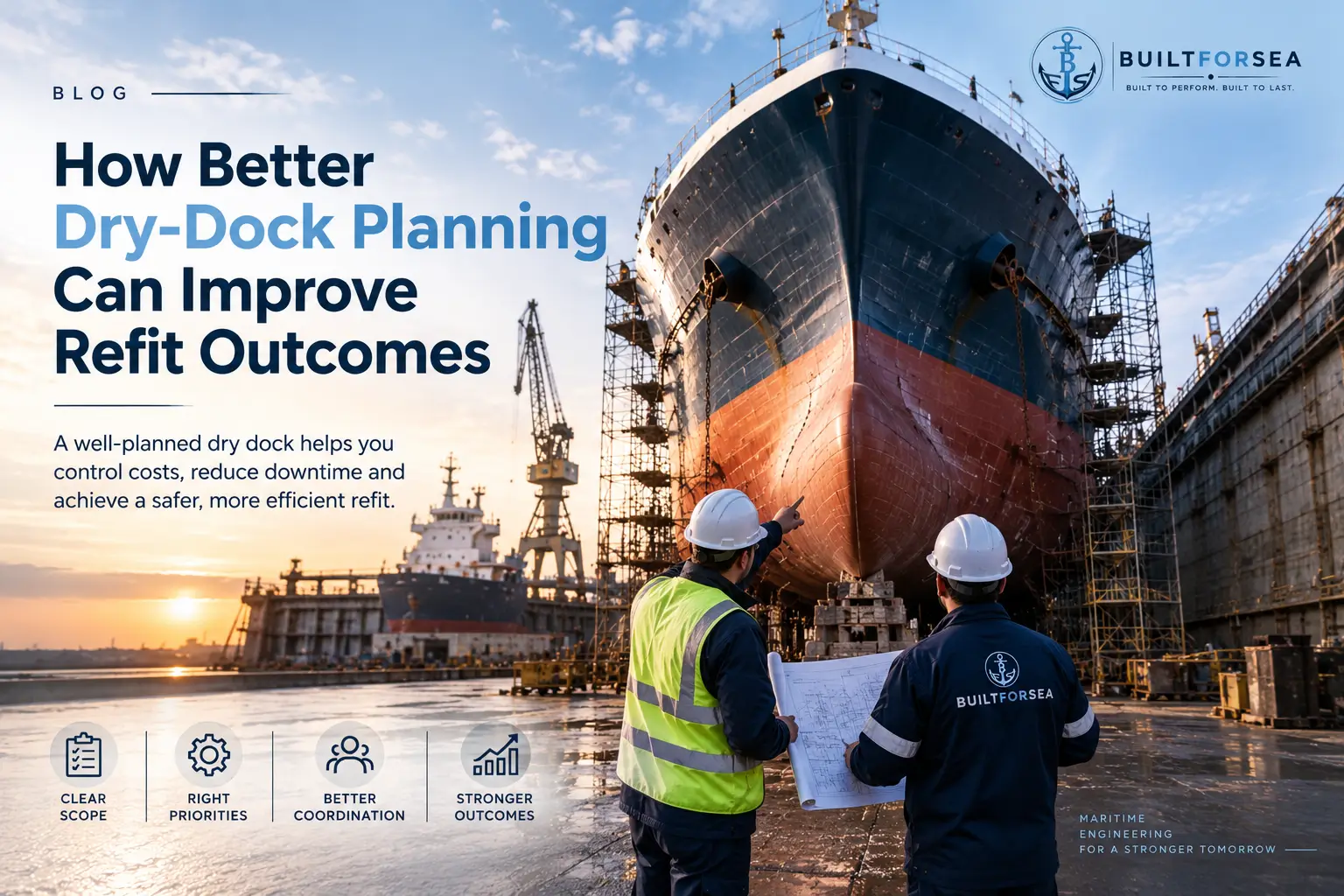
Planning for the next dry dock
One of the biggest advantages of proactive maintenance is better preparation for dry-docking.
When condition information is collected throughout the operating period, owners can begin developing repair scopes earlier. This can help with budgeting, material procurement, contractor coordination and dock planning.
Conclusion
Effective vessel maintenance is ultimately about making better decisions earlier.
A proactive approach helps vessel owners move from responding to failures toward managing asset condition with greater visibility and control. The result is a more predictable maintenance program, better operational readiness and stronger long-term asset performance.